
AI Expo Spring 2026 Participation Report | Experiencing the Current State of Generative AI
Jun 13
4 min read
In early April 2026, on a beautiful spring day when the weather was starting to warm up again, I went to the AI Expo held at the Tokyo International Forum in Yurakucho.
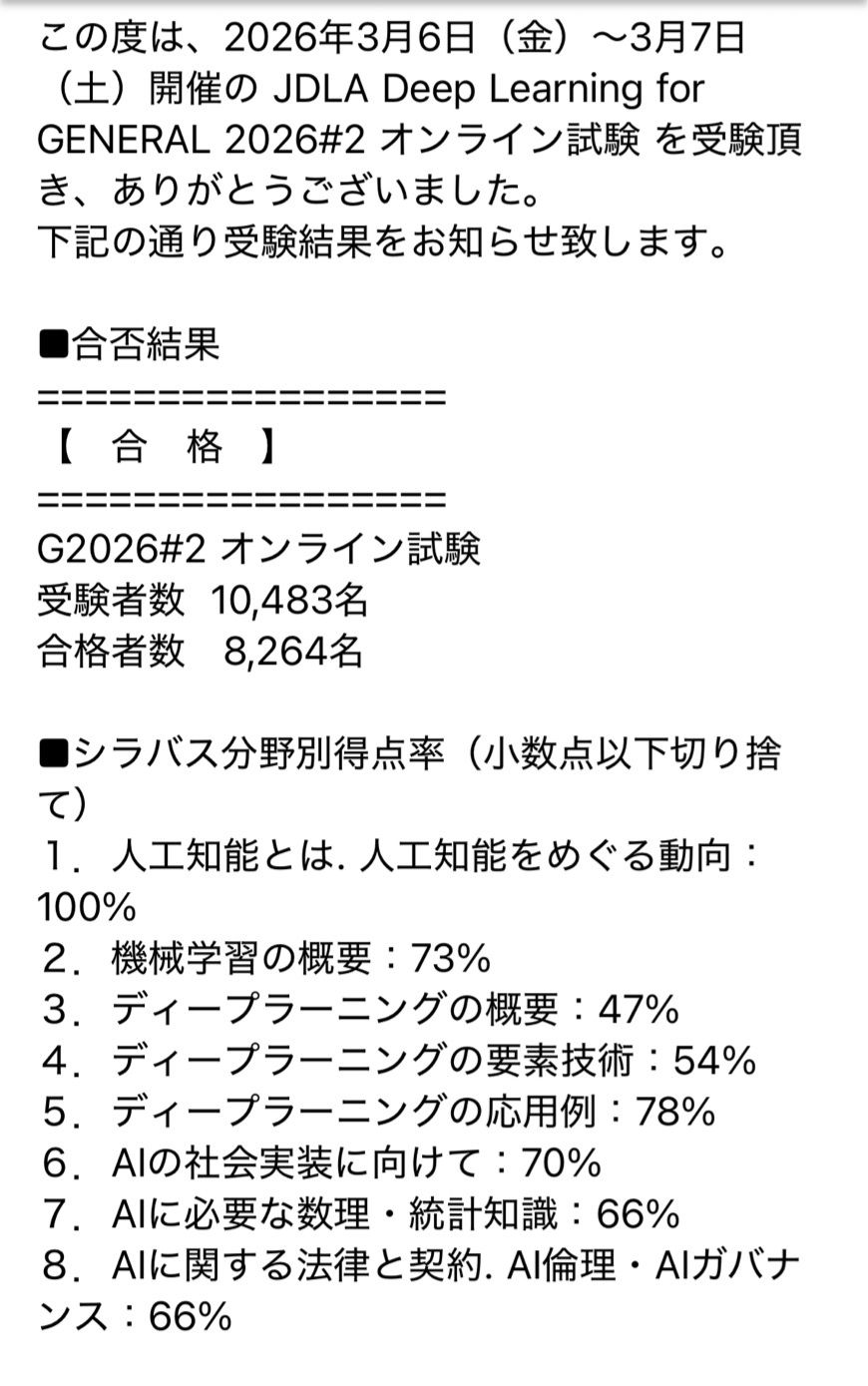
Having passed the G-Test, I naturally developed an interest in AI, and I'm now curious about what it's actually like working at an AI venture company.
Is it really that difficult? Or is it something that's within my reach?
I participated out of interest in these matters.
To put it simply, I felt that "AI is no longer a thing of the future, but something that can be implemented in real-world situations."
If you're struggling with the same issues I used to, please refer to this article.
What is the AI Expo?
It is primarily an event where many large corporations and AI startups participate to promote and contract for their services.
It wasn't just salespeople promoting the event; some booths allowed attendees to talk to developers, and the conference venue hosted numerous lectures (though by reservation only).
My purpose for attending was to learn about the actual situation on the ground. I honestly stated this, and it allowed me to connect with many companies.
Thank you all so much for speaking with me without showing any signs of displeasure.


What kind of AI-powered services did some companies offer?
Development of tools that integrate AI with marketing, such as SEO.
AI chatbot
AI development for automated telephone answering
AI development for generating meeting minutes
Development of physical AI such as robots
Development of training tools using generative AI
AI agent development
Development utilizing AI for speech generation
Image AI-based development
And so on.
To the venue, Tokyo International Forum
This is the first time in my life I've ever participated in a specialized exhibition like this.
And I'm participating as a representative of my own personal business.
I was excited, but also a little nervous.
I've been to the Tokyo International Forum several times before, and it's always been a building with a futuristic feel thanks to its glass facade.

My personal experience with the current state of generative AI
AI is shifting from "research" to "practical application."
Until you actually go there, you wouldn't know that so many well-known companies, including famous corporations and mega-ventures, are participating.
I also wondered if they might be developing AI brain models or something like that.
But the reality was completely different.
Dify: The presence of no-code AI
Of all the large corporations and venture companies I spoke to (I visited almost every single one), not a single one had actually created a model.
The vast majority of companies (I'd say over 90%) were using Dify.
While some companies connected their models using AI development apps within Azure or with Python/Node.js, they were a very small minority.
Even during conversations, I was able to fully utilize what I had studied for the G-Test, and not only was I able to communicate effectively, but there were several instances where the sales representative asked me to please go to the back and speak with the development team.
I learned a great deal.
It really gave me a sense of "Ah, so this is what the situation is like on the ground now."
Although I knew the name Dify, I had never seen or used it before.
I was able to see it in person at the venue.
My immediate thought was, "Oh, this is similar to RPA (which I've tinkered with a bit at work)."
and,
Even non-engineers can utilize AI.
However, basic knowledge is important.
That's what I thought.
I'm glad I persevered with my studies, even though I faced setbacks several times. Currently, I'm studying using the following books:

Here is the link to the book on the right: https://amzn.asia/d/04D1BnTY
Here is the link to the book on the left: https://amzn.asia/d/01Sa4EEO
I attended a lecture by people from the department responsible for AI development and internal dissemination at a major corporation.
I had made a reservation in advance for a lecture by a certain long-established company.
I actually had the opportunity to speak with them in person at a business card exchange event.
They said that the most challenging part of development, maintenance and improvement, and internal dissemination (getting people to use it) was maintenance and improvement.
The development itself was apparently completed in just over a month by a few people, mainly the person I spoke with directly (a young person who had already studied Python at university).
However, things got difficult after that.
Yes, I'm sure you've all seen newly implemented AI systems give incorrect answers.
I also tried using a chatbot that was added to a website of a public institution.
I once typed "What are the opening hours?" and received a response like, "The opening hours for a certain company are from XX:XX to XX:XX."
This is a common occurrence when first implementing the system, and the real challenge lies in adjusting it so that the AI can consistently produce correct answers. It takes a considerable amount of time to achieve this.
I see... so creating AI isn't the end of the story at all. In a sense, the real work begins after it's finished. Thank you to the person in charge for sharing your valuable insights.
Things I want to learn from now on
Dify
OpenAI API
Fast API
Python
AI Agent
SEO × AI
Web production × AI
I felt that AI alone is not enough; it only becomes practical when combined with "business understanding," "web," "SEO," "data," and "automation."
"We're all connected," that's what I thought.
In conclusion
Actually attending the AI Expo and exchanging business cards and talking with so many people was incredibly valuable. Thank you very much.
AI is no longer something special.



Comments